Independent legal and historical research on the transatlantic trade in enslaved Africans and the structures of colonisation. Evidence for communities. Research for change.
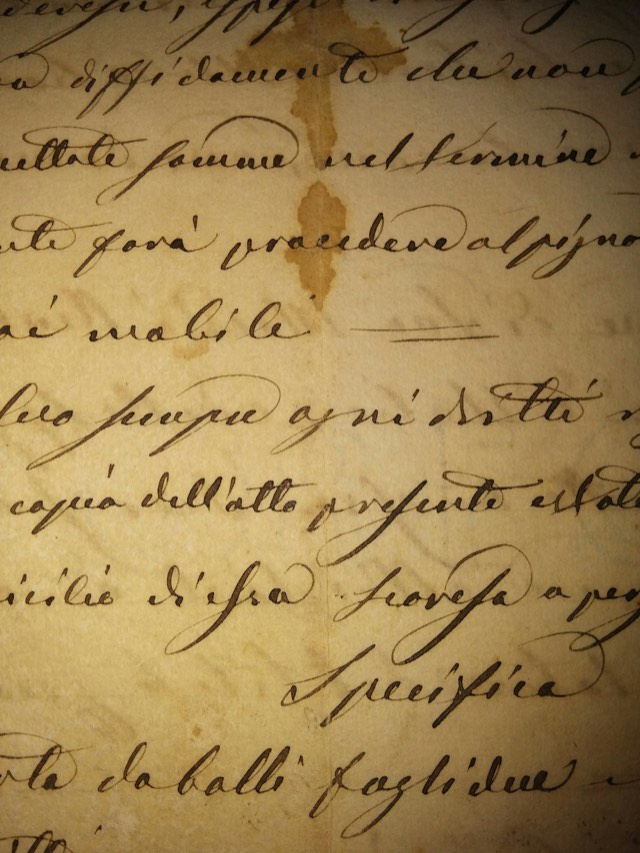
In their own archives, in their own language, in their own hand. The transatlantic trade in enslaved Africans and the colonisation that accompanied it were built through statutes, administered through courts, and documented through official records. The nations that participated created legal frameworks to authorise, regulate, and profit from the enslavement of millions of African people.

( The written record )
Different countries.
Different systems.
Different continents.
Same outcomes.
Not history — right now, across every continent
In June 2026, the entire night patrol of Montreal-Nord’s Station 39 was disbanded. Officers had been issuing tickets based solely on ethnicity, and cutting locs from Black men’s hair during interventions — keeping them as souvenirs. Residents and activists who had reported racial profiling for years were not surprised.
The average white household holds 4.3 times the wealth of the average Black household. White families own 84% of all U.S. wealth while making up 66% of households. The Black-white homeownership gap is wider today than in 1960 — when housing discrimination was legal.
After Kylian Mbappé dominated on the pitch at the 2026 World Cup, a Paraguayan senator called him a “colonized Cameroonian desperately trying to pass himself off as French” and a “brute who had not learned to write.” One of the greatest athletes of his generation. It was not enough. When challenged, she doubled down.
Chlordecone, a toxic pesticide banned in mainland France in 1990, was kept in use in Martinique and Guadeloupe until 1993. Over 90% of adults are now contaminated. The islands have among the world’s highest prostate cancer rates. In June 2026, after 20 years of legal proceedings, the criminal case was dismissed.
Aliko Dangote built the largest petroleum refinery on the African continent — a $20 billion investment to end Nigeria’s dependence on fuel imports. International oil companies responded by demanding inflated premiums for domestic crude. Government agencies created regulatory obstacles. The refinery accused IOCs of “deliberately and willfully” frustrating its operations. Africa builds. The structures resist.
Of the 4,330 people killed by police across nine Brazilian states in 2025, 86% were Black. A Black person in Brazil is four times more likely to be killed by police than a white person. Police killings rose 6.4% from the year before. The annual report documenting this is called Pele Alvo — “Skin as a Target.”
For Afro-Caribbean communities, for African peoples, for Afro-descendant populations across the Americas, for Black communities in Canada, the United States, and Europe. Communities that name themselves in their own ways, rooted in their own histories, facing the same structural conditions. Understanding why requires evidence.
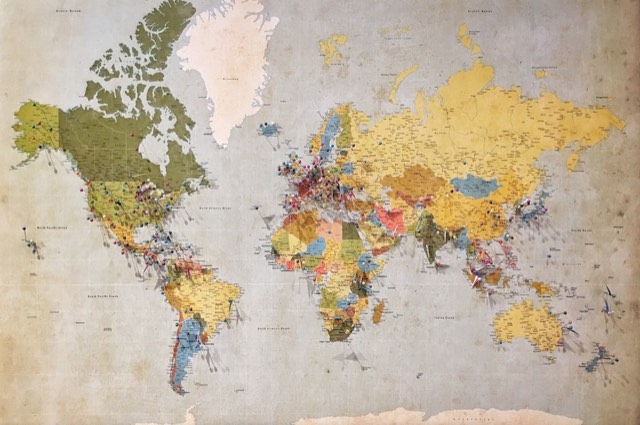
From the Caribbean to the African continent to the diaspora in Canada, the United States, and Europe, wealth continues to flow in the same direction it flowed during the transatlantic trade. The systems have changed names. The outcomes have not.
Nations that gained independence inherited economic structures designed to extract, not to develop. Many of these structures remain in place through trade agreements, currency arrangements, and institutional frameworks that trace directly to the period of the trade.
Access to capital, to property, to political participation. The barriers look different in different places, but the patterns are consistent. Different systems, same outcomes.
Anti-racism policy recognises that these conditions have structural roots. But effective policy requires evidence. Legal and historical research that connects the past to the present. GRJI produces that evidence so that policy can address structures, not just symptoms.
GRJI's research is not about moral judgment. It is about evidence. We conduct rigorous legal and historical research on the transatlantic trade in enslaved Africans and the colonial period, producing findings that are peer-reviewed, policy-relevant, and freely available to the communities most affected.
GRJI operates independently of any government, institution, or advocacy organisation. The research meets peer-reviewed publication standards.
The legal record exists across multiple languages and legal traditions. GRJI works across English, French, with developing capacity in Spanish and Latin.
Every research output maps to a contemporary policy issue. The goal is evidence that policymakers, educators, and communities can use.
People still say these things — in classrooms, in parliaments, online. Each claim below is real. So is the evidence that answers it. Don’t take our word for it: every correction ends with something to search for yourself.
Colonial infrastructure was built to extract, not to develop. Railways ran from mines and plantations to ports — rarely between African communities — and were largely paid for by African taxes and built with forced labour. On the Congo-Océan railway alone, an estimated 17,000 or more African labourers died. Hospitals and schools served settlers first; at independence, entire nations were left with a handful of universities and doctors.
Search it yourself: “Congo-Océan railway forced labour” ↗ Cherchez par vous-même : « chemin de fer Congo-Océan travail forcé » ↗Researchers who counted all the flows in and out found the reverse. The Honest Accounts 2017 study calculated that Africa received about $161.6 billion in a year — aid, loans, remittances — while about $203 billion flowed out through profit repatriation, illicit financial flows, debt service, and costs imposed by climate change. Africa is a net creditor to the rest of the world.
Search it yourself: “Honest Accounts 2017 Africa” ↗ Cherchez par vous-même : « Honest Accounts 2017 Afrique » ↗Resistance was constant — from hundreds of documented shipboard revolts, to maroon societies like Palmares that stood for almost a century, to the Haitian Revolution, which defeated three empires and created a free state. The myth needed pseudo-science to survive: in 1851, physician Samuel Cartwright invented “drapetomania” — a supposed mental illness that made enslaved people flee. Running toward freedom was called a disease.
Search it yourself: “drapetomania” ↗ Cherchez par vous-même : « drapétomanie » ↗In 1963, an Oxford professor could still claim Africa had “no history”. The archives answer: hundreds of thousands of manuscripts from Timbuktu’s libraries on law, astronomy, and medicine; Ethiopia’s Ge’ez script in use since antiquity; the stone city of Great Zimbabwe; Benin City’s walls, among the largest earthworks ever raised. Europeans did not find a blank continent. They found civilisations — and archives.
Search it yourself: “Timbuktu manuscripts” ↗ Cherchez par vous-même : « manuscrits de Tombouctou » ↗Abolition was forced — by the Haitian Revolution, by uprisings like Jamaica’s Baptist War, and by decades of Black organising. When Britain abolished slavery in 1833, it paid £20 million — 40% of the national budget — in compensation. Every pound went to the 46,000 slave owners. The formerly enslaved received nothing, and British taxpayers only finished repaying the loan in 2015.
Search it yourself: “UK slavery compensation 2015” ↗ Cherchez par vous-même : « compensation esclavage Royaume-Uni 2015 » ↗It never did. Nineteenth-century “race science” — skull measuring, phrenology — was assembled to justify slavery and empire, and has been dismantled piece by piece. Modern genetics finds no biological races: around 85% of human genetic variation exists within any population, not between them. The hierarchy was not discovered. It was manufactured.
Search it yourself: “scientific racism genetics” ↗ Cherchez par vous-même : « racisme scientifique génétique » ↗The communities deserve more than awareness. They deserve evidence. They deserve justice.
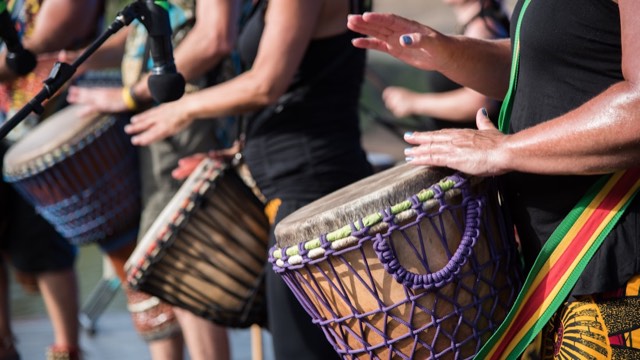
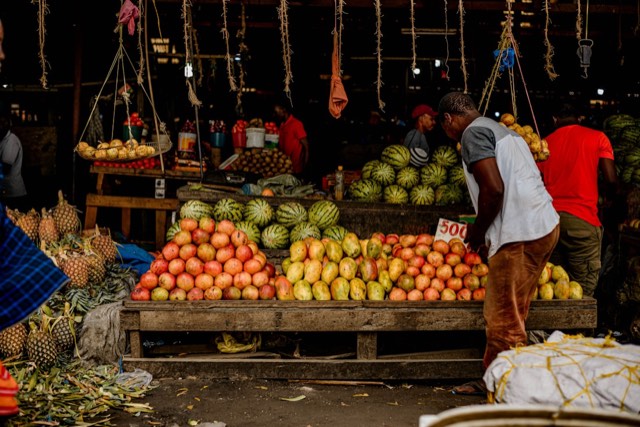
Across the African continent, throughout the Caribbean, in the Americas, in Europe. African, Afro-Caribbean, Afro-descendant, and Black communities have built cultures of extraordinary richness. They have created art, music, literature, philosophy, law, science, and governance traditions that have shaped the world.
Islands of resilience, culture, and self-determination
54 nations, ancient civilisations, unbroken history
Communities that built new worlds from what was taken
Beauty that endures, art that transforms
The Global Reparative Justice Institute is a Canadian nonprofit organisation, incorporated in 2026, with a focused mandate: conducting legal and historical research on the transatlantic trade in enslaved Africans and the colonial period.
GRJI exists to serve the communities most affected by the legacy of the transatlantic trade and colonisation, by producing rigorous, peer-reviewed research that strengthens policy, informs public understanding, and supports the case for justice.
All research outputs are published open access, freely available to policymakers, educators, communities, and researchers worldwide. African, Afro-Caribbean, Afro-descendant, and Black communities everywhere should not have to pay to access the evidence that documents what happened to them.
2026 | Montreal, Quebec, Canada
Legal and historical research on the transatlantic trade in enslaved Africans and the colonial period
Legal and historical research methods. Independent, peer-reviewed, policy-relevant.
English, French, with developing capacity in Spanish and Latin
All publications open access. All research independent. All findings evidence-based.
GRJI welcomes inquiries from researchers, policymakers, educators, funders, and community organisations working toward racial justice.
Get in Touch